Bursitis Injury Facts Part 2:

Normally, bursa are flat and contain very little fluid. An injured bursa however, is swollen with fluid and not so flat anymore.


The most common bursitis injuries are:
Prepatellar Bursitis (housemaid's knee),
Superficial Infrapatellar Bursitis (clergyman's knee),
Trochanteric Bursitis (hip),
Olecranon Bursitis (student's elbow) and
Subacromial Bursitis (shoulder bursitis).


Deep Bursae separate bare areas of bone from overlapping muscles.
Superficial Bursae separate bare areas of bone from skin or tendons.


Deep Bursae develop in the womb.

Superficial Bursae develop within months to several years after birth.


Household names for various bursitis injuries include: Popeye's Elbow, Miner's Elbow, Weaver's Elbow, Housemaid's Knee, Hod-Carrier's Shoulders, Dustman's Shoulders, Student's Elbow, and Clergyman's Knee


Bursitis Injury Facts Part 3:


On occasion, bacteria can invade a bursa and cause an infection. An infected bursa is known as septic bursitis and can be life-threatening if left untreated. So make sure you see a physician!


Septic bursitis is most common in knee joints and elbow joints as the bursae in these locations are close to the skin and most susceptible to bacterial invasion.


It is not uncommon for bursitis to be misdiagnosed as arthritis.


Bursitis is best avoided by staying in shape, taking frequent breaks from repetitive or laborious tasks and cushioning joints if on them for long periods (ie. kneepads for gardening).


A Bursa can swell to a surprisingly large size. In cases of heavy swelling, your physician may choose to drain fluid from the swollen bursa. If a lump is present in chronic bursitis cases, excision may be required.


Clergyman's Knee comes from a more upright posture when kneeling in comparison to Housemaid's Knee. Patients suffering from gout or syphilis can be at higher risk of contracting Clergyman's Knee.


Our Experienced Sports Injury Specialists are Friendly and Very Helpful.


Diagnosing Bursitis

Diagnosing bursitis can be difficult as many conditions have bursitis-like symptoms. Your doctor will need to perform a thorough assessment and possible run tests to determine if your pain is caused by bursitis or by muscle or joint injury, local bleeding, synovitis, arthritis, tendonitis, cellulitis or a number of other conditions.

To begin with, your doctor will gather a medical history about you and your current condition and symptoms. You will discuss the intensity of your present pain, the duration of your symptoms, which movements are causing your pain, and the limitations you are experiencing. He/she will inquire about and recent activity or injury, even if the injury is a small one that could cause trauma, when your pain started, and whether or not you have ever had treatments for this or a similar condition in the past, are very helpful in assessing your injury.

A physical examination will be performed and your doctor will visually assess and palpate (feel) the bones and soft tissue around your sore joint and the opposite joint to evaluate symmetry and recognize differences. This will identify any abnormalities, such as mild or severe inflammation, bone or tissue deformity, atrophied muscles, redness and/or warmth on the skin.

You will generally be asked to complete a series of movements to measure your active (performed by you) and passive (performed by your examiner) range of motion. These will test any possible weaknesses, joint stability and location of tenderness.

In order to rule out other conditions your doctor may recommend blood tests, an X-ray or MRI to investigate your bone structure and/or to examine the soft tissues and fluid in your shoulder joint.

Diagnostic Exams and Tests

Fluid Removal

Your doctor may aspirate (use a needle) to remove synovial fluid from the joint to check for possible staphylococcus epidermis (or staphylococcus aureus) bacterial infection. The knee and elbow tend to be the joints that are prone to septic (infectious) bursitis. If infection is detected you will be prescribed an antibiotic to treat it.

X-rays
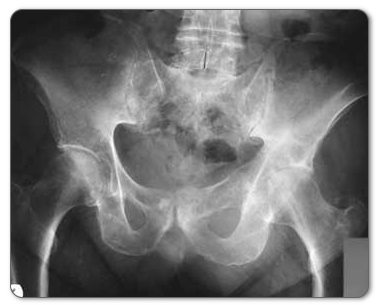
illiopsoas x-ray

X-rays will provide a two-dimensional image of the overall structure of your joint. Although bursitis cannot be diagnosed from an X-ray, they are helpful in identifying other possible causes of pain and/or ruling out other conditions. Some other possible causes of pain that an X-ray can identify include instability, abnormal bone shapes (bone spurs or bone cysts, wear and tear on the joints, avulsion fractures (when a fragment of bone tears away from the main bone along with the muscle, tendon, or ligament as a result of trauma), dislocations, arthritis, calcium deposits in the bursa or joint, and/or other problems.

MRI and CT Scans
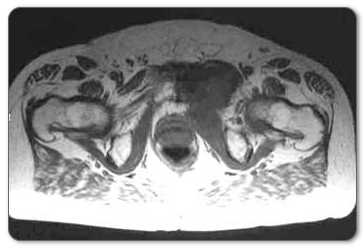
illiopsoas mri

You doctor may also order an MRI (magnetic resonance imaging) or a CT (computed tomography) scan for more detailed information to help evaluate the soft tissues (bursa, muscles, tendons, ligaments, fascia, and other connective tissues) in and around your joint. They will show fluid next to the muscle, and may identify bursitis, inflammation, tendinitis, tears and other associated conditions.

Diagnostic Ultrasound

Ultrasonography can confirm diagnosis and demonstrate tissue disruption or thickened tendons. It is good for identifying bursitis and excessive fluid in bursa, and/or eliminating other causes of pain.

Specialized Hamstring Customer Service Advisor can help you with product selection.

pain relief and injury treatment with ultrasound therapy

Inferno Wrap Elbow for tennis elbow, epicondylitis, elbow strains and elbow sprain

Freezie Wrap Elbow for tennis elbow, epicondylitis, and elbow sprain to prevent surgery

Inferno Wrap Shoulder - an advanced treatment for shoulder injury and rotator cuff injury

Freezie Wrap Shoulder - efficient relief of swelling and pain from an active sprain, shoulder strain, whiplash, or tight upper back muscles

Inferno Wrap Knee for meniscus injury acl injury mcl injury or hyperextended knee

Cold Compression Knee Freezie Wrap for meniscus injury mcl injury and acl injury

Blood Flow Stimulation Therapy with an Inferno Back wrap for the ultimate in sore back healing

Freeze Wrap Back - reduce back pain and swelling in sore, strained or overused muscles, especially in the lower back and trapezius muscles

Contact one of our Mendmeshop Customer Service Advisors for any questions help with ordering and recommended treatment directions